
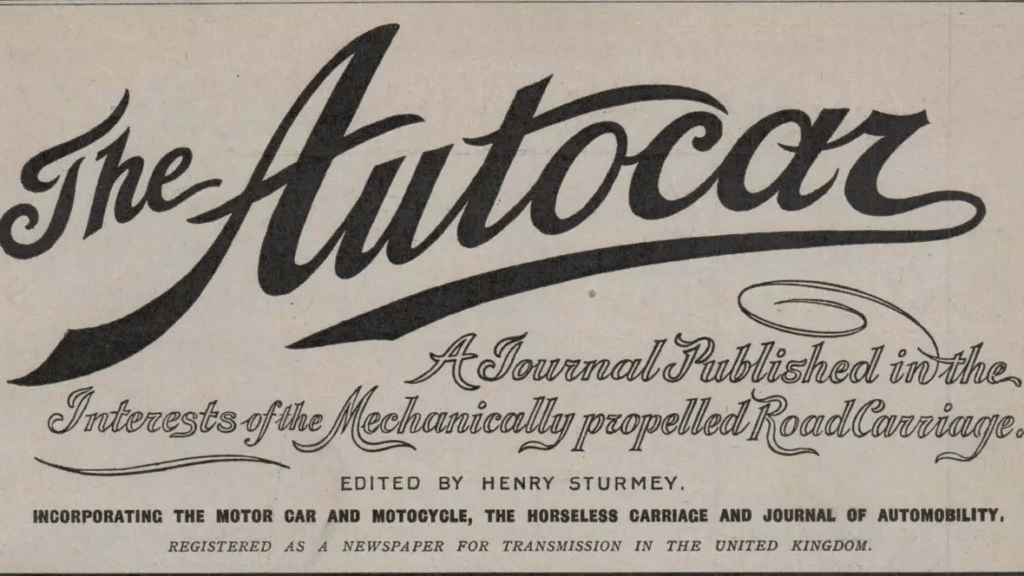
Horseless Carriages? Electric Cars? The Early Days of Automobiles
In days of old, when knights were bold…
OK, that’s quite enough schoolboy humour for one day, but the point is we’re going back in time. Back to the days before constraints of mass production and standardised forms, back to the very first cars, the horseless carriages.
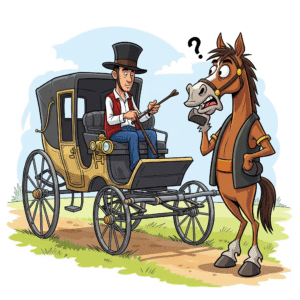
Shockingly enough, this was a real term, although it was short lived. Commonly found from the late 1800s to around 1910, it wasn’t only used colloquially, it could be found in print and public discourse.
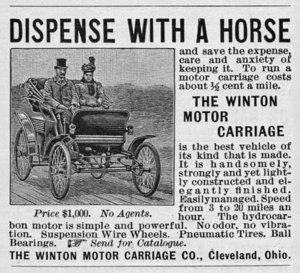
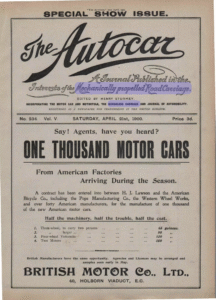
These images provide us with some insight into the early design of cars and the language that surrounds them. First, we see that “motor carriage” and “horseless carriage” were both real terms that reflected the design of the earliest automobiles whilst framing them in a way that made them understandable for all. Secondly, the use of the word “carriage” clearly draws attention to their roots, early cars were literally modified carriages[1]. Built by the coachmakers who later became coachbuilders when they started to make bodies for cars[2], these early cars featured wood, leather, and brass, and while they did without fripperies such as roofs, brakes, and windscreens, they did offer elegant curves and the sort of absurd design choices (tiller steering?) that only rarely rear their heads in the modern age[3].
More surprising than the origins of car bodies is the dilemma that was the source of power; cars cannot run on love alone. In the early 1890s there were three competing technologies to drive horseless carriages. Steam cars, like the Stanley Steamer, were smooth and relatively quiet, but slow to start. Electric cars, like the 1901 Columbia Runabout, were clean, quiet, and popular with women (insert sexist petrolhead joke for yourself here, if you really feel the need to), but had limited range limiting their attraction to urban drivers
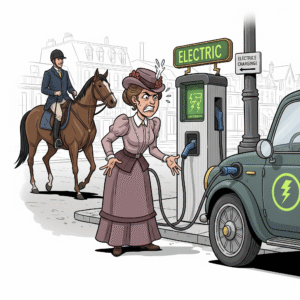
Finally, there were petrol powered cars, which were noisy, dirty, and hard to crank (i.e. manly), but which had range and speed!
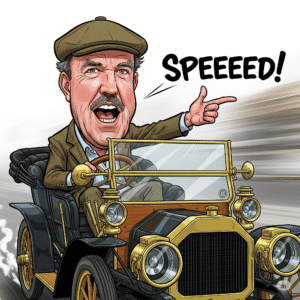
As we all know, petrol won thanks, partly to Cadillac’s 1912 self-starting engines that did away with cranking and broken wrists, but mostly due to better infrastructure and range.
During these early days of automotive technology there was a great deal of trial and error in the design process. Some ideas (passengers facing backwards, drivers being exposed to the elements while passengers were protected by tonneaus in a rear compartment, and complex control mechanisms which were not standardised) did not pass the test of time, but others (pneumatic tyres, differentials, drum brakes) remain with us today.
Whilst this was a time of experimentation and exuberance, it was short lived. Change was coming in the form of mass production, and it will not be until the 1920s and the Art Deco styling of the time that we will see curves again. For now, we enter the era of early assembly lines, a time when black really was the new black…
[1] This is not a typo. The word “motocycle” was first used in 1895 as a more concise name for a “horseless carriage”
[2] The influence of the bicycle on early automobiles should not be overlooked. Karl Benz’s 1885 Motorwagen was basically a tricycle with a gas engine bolted on, and wire wheels which have repeatedly gone in and out of fashion can be attributed to bicycle technology.
[3] This allegedly makes sense.
[4] The Saab Prometheus concept from 1992 had a joystick which was equally insane: https://www.wired.com/2015/01/well-didnt-work-saabs-weird-joystick-controlled-car-wasnt-super-idea/