
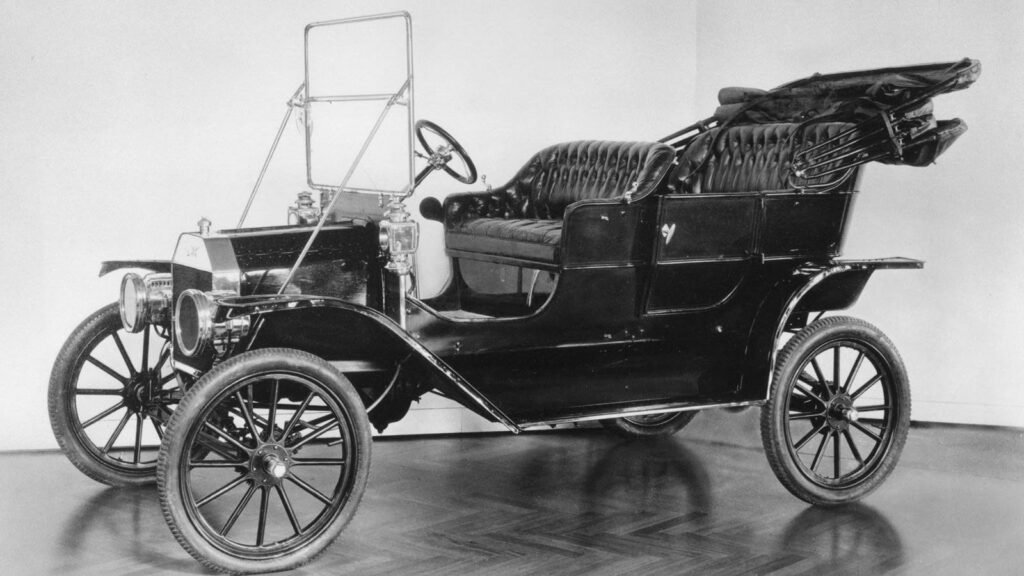
Automotive Design I: The Dawn of Mass Production
One cannot think of antisemitism[1] mass production without thinking of Henry Ford. His introduction of the moving assembly line for the Model T in 1913 had a deep and everlasting impact on automotive design. Craftsmanship and customisation were shown the door to make room for a new age of efficiency and standardisation. Designs were simplified, parts were made interchangeable, curves all but disappeared, and any frippery was discarded in the pursuit of improved production flow. If we are feeling generous, we might say that the Model T had a certain utilitarian charm, but it really was the prototypical example of form following function, where function was ease of manufacture.
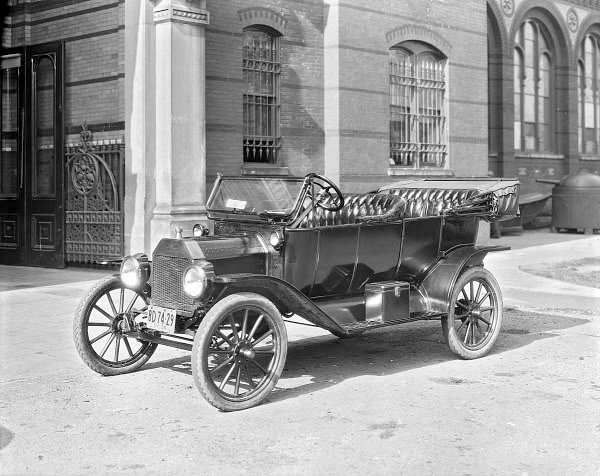
The Model T was offered in a range of three body styles, but each of these was attached to the same chassis, a solution that many modern car conglomerates have increasingly adopted, and had a simple, efficient engine designed for easy access and repair, a trait that seems to have become increasingly rare. It was uncomfortable at speed, difficult to drive, and to top it all, was better reversed up hills due to its gearing. As for the colour, well it was originally available in a choice of colours, but from 1913 till 1925 it was mass-produced only in black.
And the rewards for this loss of design flair? Greatly reduced cost which translated to lower sales prices and dramatically increased sales. By increasing production volumes, Ford was able to reduce the price of the Model T from US$850 (equivalent to about 18 months salary for an average wage) in 1908 to US$260 (equivalent to about 4 months salary for an average wage) by 1925[2].
But these were the early days of mass production, whilst the benefits would not go away, the influence of motorsport combined with a rising consuming desire for elegance and luxury in the 1920s mean that we will move away from these initial boxy designs and enter a more stylish era, yes as we enter the 1930s it’s time to meet Streamline Moderne and Art Deco.
[1] At least the Henry Ford Museum doesn’t gloss over this issue too much: https://www.thehenryford.org/collections-and-research/digital-resources/popular-topics/henry-ford-and-anti-semitism
[2] https://www.britannica.com/technology/mass-production



Pingback: Horseless Carriages? Electric Cars? The Early Days of Automobiles - My Fascinations