
What have tyres got to do with food?
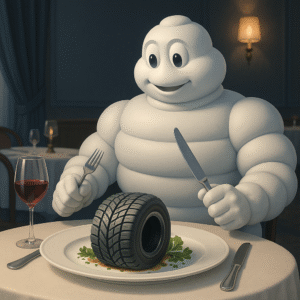
The ultimate symbol of restaurant prestige? An outdated Eurocentric take on dining? Something worth killing yourself over? Nowadays the Michelin Guide and its stars can be all or none of the these, depending on your point of view.
The guide was originally conceived by Michelin, the French tyre manufacturer, as a tactic to get early motorists to drive more, and therefore need more tyres. As it is today, so it was then, a small red book full of useful information for the intrepid traveller. Initially the guide was free, but in 1920, when Andre Michelin noticed that the guides were being used by garages for other purposes (e.g. holding up workbenches), the company started charging for them, arguing that people only value that which they pay for. At this point the guide started to include its famous reviews and stars, awarded as follows:
★ High quality cooking, worth a stop
★★ Excellent cooking, worth a detour
★★★ Exceptional cuisine, worth a special journey
Over 100 years later, love it or hate it, the Michelin guide has left an indelible mark on global cuisine.